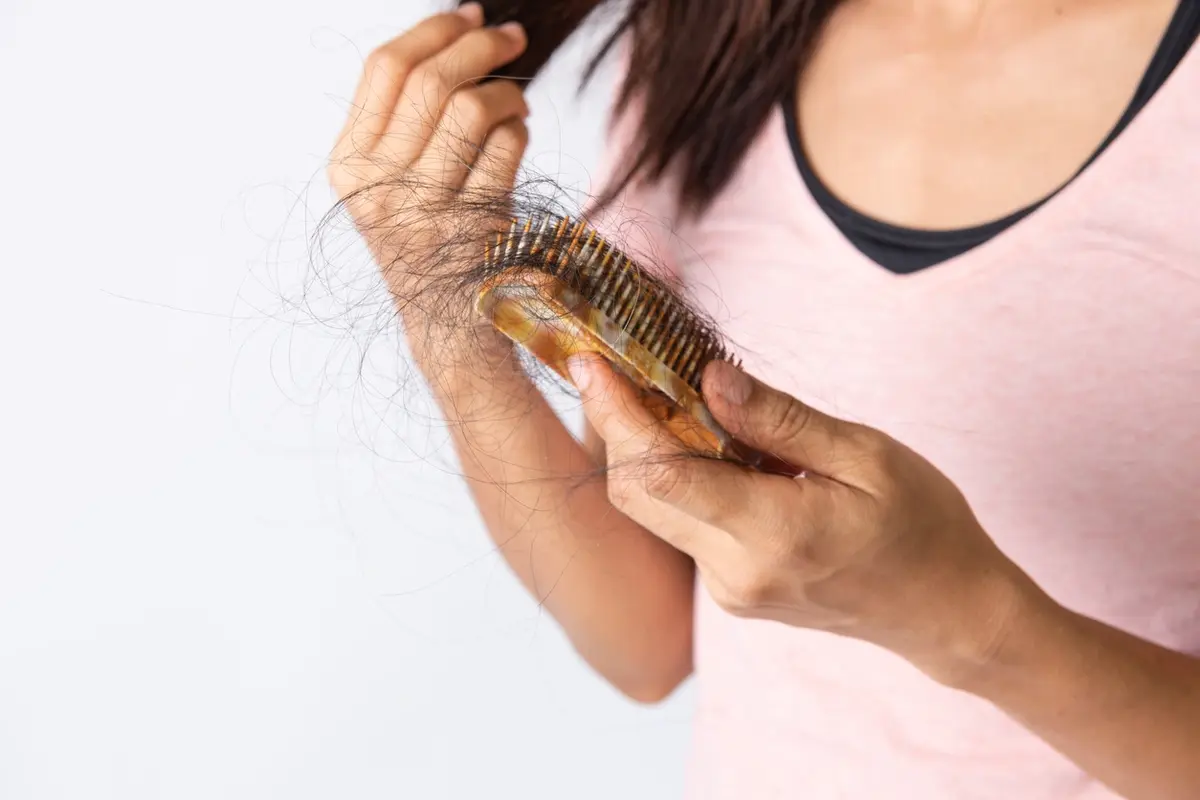
You noticed it first in the shower drain. Then in your brush. Then in the mirror.
Hair loss rarely announces itself. It happens gradually, quietly, until one day you realize something has shifted. And once you start looking for answers, you find a lot of noise: supplements that promise miracles, shampoos with scientific-sounding names, forums full of people trying the same things and getting the same mixed results.
We see this regularly at GRACE Direct Primary Care in Prescott. Patients come in frustrated, not because hair loss is new for them, but because no one has taken the time to look at why it is happening.
That is where we start. Always with the why.
Hair Loss Is Common. The Cause Is Personal.
According to the American Academy of Dermatology, an estimated 80 million Americans — 50 million men and 30 million women deal with hereditary thinning or baldness. And that is before counting the millions more affected by stress-related, postpartum, hormonal, and nutritional hair loss. Men and women are both affected, though the patterns and causes often differ.
What most hair loss content glosses over is that the treatment depends entirely on the cause. Treating hormonal hair loss the same way you treat stress-related hair loss gets you nowhere. And treating the scalp without looking at what is happening in the body beneath it often gets you the same result.
At GRACE, we do not hand out a single-protocol answer. We look at the full picture: your labs, your hormones, your stress load, your sleep, your gut health, your history. Then we talk about what makes sense for you.
The Most Common Causes of Hair Loss
According to both the American Academy of Dermatology and the Mayo Clinic, hair loss has many causes, and the cause determines whether it is temporary or permanent, treatable or not. At GRACE, identifying the cause is always the first step. We never recommend a treatment before we understand what is driving the loss.
Hereditary Hair Loss (Androgenetic Alopecia)
The most common cause of hair loss worldwide is genetics. The AAD calls it androgenic alopecia. Most people know it as male pattern or female pattern hair loss. In men, it typically starts with a receding hairline or thinning at the crown. In women, it usually appears as overall thinning or a widening part.
The underlying mechanism is DHT, a hormone derived from testosterone that shrinks hair follicles over time. Shrinking can begin as early as the teen years, though it more commonly appears in the 30s, 40s, and beyond. This type of hair loss is chronic but manageable with the right plan started early.
Hormonal Changes
Hormones drive hair growth. When they shift, hair often follows. In women, drops in estrogen and progesterone during perimenopause, menopause, or after stopping certain birth control pills can cause noticeable thinning. Polycystic ovary syndrome, known as PCOS, is another hormonal driver that the AAD specifically identifies as a common cause of hair loss in women.
Many patients come to us with thinning they cannot explain. Frequently, the answer is in their hormone labs, not their shampoo.
Thyroid Disease
Both hypothyroidism and hyperthyroidism can disrupt the hair growth cycle. Thyroid disease causes noticeable thinning, sometimes in clumps. The good news is that treating the underlying thyroid condition can reverse the hair loss in most cases.
At GRACE, thyroid function is one of the first things we evaluate when a patient presents with unexplained hair loss and fatigue together.
Postpartum Hair Loss
After delivery, estrogen levels drop sharply. Follicles that were held in the active growth phase during pregnancy begin shedding at once. According to research published via the National Institutes of Health, this shedding typically begins two to four months after delivery and lasts six months to one year for most women.
It is not permanent. But it can feel alarming, especially when no one warned you it was coming. If you are in this window and want support for your follicle health while your hormones restabilize, we can help you understand your options.
Stress and Telogen Effluvium
Telogen effluvium is hair loss triggered by physical or emotional stress. A serious illness, surgery, grief, rapid weight loss, or a sustained period of high stress can push a large number of follicles into the resting phase simultaneously. According to NIH-published research, shedding typically occurs 2 to 3 months after the trigger, which is why so many patients cannot connect the loss to the original cause.
The body usually self-corrects once the stress resolves. The AAD notes that most people see their hair regain normal fullness within six to nine months after excessive shedding stops. Support during that window, including follicle-level care, can help the process along.
Nutritional Deficiencies
Deficiencies in biotin, iron, protein, and zinc are established causes of noticeable hair loss. Hair follicles are metabolically active and need these nutrients to function. Deficiencies, even subclinical ones that do not show up as obvious symptoms elsewhere, can slow growth or increase shedding.
This is one reason we run labs before drawing conclusions. A patient who is quietly iron-deficient needs that addressed as part of any hair loss plan.
Alopecia Areata
Alopecia areata is an autoimmune condition where the immune system attacks hair follicles, causing patchy, round areas of hair loss on the scalp or elsewhere on the body. It can come and go, stabilize, or progress. In some cases, it resolves on its own; in others, treatment can help stimulate regrowth.
At GRACE, we assess for autoimmune patterns and help patients understand what they are dealing with before recommending a path forward. Depending on severity, this condition may also require referral to a specialist.
Scalp Conditions
Infections, scalp psoriasis, and conditions like ringworm can cause hair loss by inflaming or damaging the scalp environment where follicles live. The Mayo Clinic notes that patches of scaling that spread over the scalp, accompanied by redness or breakage, may signal ringworm. Scalp psoriasis is another condition the AAD identifies as a cause of hair loss. Hair typically regrows once the underlying scalp condition is treated.
If you notice scalp changes alongside hair loss, that combination is worth evaluating rather than treating with a product alone.
Hairstyles, Hair Care, and Traction Alopecia
Tight hairstyles, such as braids, cornrows, ponytails, or extensions worn consistently over time, can pull on the follicles and cause traction alopecia. Continued pulling long enough to damage the follicle can lead to permanent hair loss.
Chemical treatments, heat tools, and perms can also weaken the hair shaft and lead to breakage and loss over time. Changing habits early can prevent permanent damage.
Medications and Cancer Treatment
A number of medications list hair loss as a side effect, including some blood pressure medications, antidepressants, cholesterol-lowering drugs, anticoagulants, and certain hormonal contraceptives. Chemotherapy and radiation to the head or neck are also recognized causes of significant hair loss during treatment. Hair usually regrows after treatment ends.
If your hair loss began around the time you started a new medication, that connection is worth raising with your provider before stopping anything on your own.
Scarring Alopecia
Scarring alopecia, known medically as cicatricial alopecia, develops when inflammation destroys hair follicles permanently. Once a follicle is destroyed, hair cannot regrow from that spot. The AAD notes that catching this condition early is critical to preventing further loss. It requires evaluation and a specific treatment approach.
This is not a category where waiting to see what happens is the right move. If you are noticing smooth, shiny, or scarred patches of scalp where hair used to grow, that warrants prompt attention.
Age-Related Hair Loss
As people age, hair growth naturally slows. Follicles eventually stop producing hair, which causes thinning across the scalp over time. Both the Mayo Clinic and AAD note this as a separate and common cause of hair loss, distinct from pattern baldness. Hair also begins to lose pigment with age.
Early treatment can help some people slow age-related thinning and support the follicles that are still active.
Hair Loss Treatment Options: What Is Available and Who It Is For
There is no single best treatment for hair loss. There is the best treatment for your type of hair loss. Here is an honest overview of the most common options.
Addressing the Root Cause First
At GRACE, this is always step one. If hair loss is driven by low thyroid, correcting thyroid function may slow or stop the loss. If iron deficiency is a factor, supplementing iron can support regrowth. If hormonal imbalance is contributing, addressing that imbalance is part of the solution.
No topical or aesthetic treatment works as well when the underlying driver has not been identified. This is the whole-person approach we bring to every patient conversation.
Minoxidil
Minoxidil is an FDA-approved topical treatment available over the counter. According to NIH-published research, minoxidil was approved by the FDA in 1988 for both male and female androgenetic alopecia. Applied to the scalp, it extends the active growth phase of hair follicles and increases blood flow to the scalp. It works best for androgenetic alopecia and is more effective when started early. It requires ongoing use to maintain results.
Finasteride and Other DHT Blockers
Finasteride is an oral medication that blocks the conversion of testosterone to DHT. According to the same NIH-published review, finasteride received FDA approval for male androgenetic alopecia in 1997 and is not approved for women due to potential risks during pregnancy. Results take several months to appear and require continued use.
PRP (Platelet-Rich Plasma) Therapy
PRP involves drawing a small amount of your own blood, concentrating the platelet-rich plasma, and injecting it into the scalp. The growth factors in the plasma can stimulate follicle activity. It requires multiple sessions and involves needles and a blood draw, which is not the right fit for every patient.
TED Hair Restoration
For patients seeking a non-invasive, needle-free option to support follicle health, Hair Restoration with TED is the treatment we offer at GRACE.
TED stands for TransEpidermal Delivery. The Alma TED system uses acoustic sound waves and air pressure to open temporary channels in the scalp and deliver a specialized hair care formula directly to the follicles, without needles, injections, or downtime.
A session takes 20 to 30 minutes. There is no topical anesthetic needed. Most patients feel a warm sensation and mild vibration. You can return to your normal routine immediately afterward.
Most patients benefit from a series of three treatments, spaced one month apart. Early signs of improvement, such as reduced shedding, can appear within two to four weeks. Visible new growth typically follows over the next few months.
TED is well-suited for patients experiencing:
- Diffuse thinning across the scalp
- Early androgenetic alopecia
- Postpartum hair loss during the recovery window
- Stress-related thinning
- Hormonal hair loss in combination with a root-cause plan
It is not a surgical procedure and does not treat scarring alopecia or advanced follicle damage. At GRACE, we assess each patient individually to determine whether TED is the right fit, and we evaluate any other factors that should be part of the plan alongside it for our members. For nonmembers, we recommend a consultation with their personal PCP for evaluation and treatment of any other factors that should be a part of their hair restoration journey plan.
To learn more about how TED works and what to expect at GRACE, visit our Hair Restoration with TED service page.
Hair Transplant Surgery
Surgical options, such as follicular unit extraction (FUE), involve relocating hair follicles from areas of healthy growth to areas of loss. Results can be permanent when the donor follicles are viable. Surgery is more invasive, significantly more expensive, and typically requires a referral to a specialist. It is best suited for patients with stable pattern hair loss who have a sufficient donor supply.
Why the GRACE Approach Is Different
Most hair loss content focuses on the scalp. We focus on the person.
When you come to GRACE, you are not getting a 10-minute visit and a product recommendation. Our members get time with a care team that reviews labs, hormones, history, and goals before recommending anything. For nonmembers, we offer TED hair restoration treatments with recommendations that their personal PCP treat the underlying cause of hair loss in conjunction with the TED treatments we offer.
We are a Direct Primary Care practice. That means no insurance billing for office visits, no rushed appointments, and direct access to your provider. Members get same-day or next-day appointments for acute concerns, longer visits, and no office visit co-pays.
If you carry traditional insurance, you can still use your insurance for labs, imaging, and specialist referrals. If you do not have insurance, we offer discounted cash pricing for many labs. Either way, you get clear information about what things cost before you agree to anything.
Our approach to hair loss is the same as our approach to everything else: look at the whole person, understand the root cause, and build a plan that makes sense for that specific patient. Sometimes that plan includes Hair Restoration with TED. Sometimes it involves labs and hormone support first. Often it is both, working together for our members.
We also work with patients who are dealing with hair loss alongside other concerns, such as fatigue, hormone imbalance, gut issues, and chronic inflammation. These things are frequently connected. At GRACE, we have the time and the clinical approach to look at the full picture for our members.
If you are in Prescott or anywhere in Yavapai County or Arizona and you are ready to get a real answer about your hair loss, we would like to talk.
Schedule a complimentary meet-and-greet or call us at 928-277-1099. There is no obligation. Just a conversation about where you are and where you want to be.
Frequently Asked Questions About Hair Loss Treatment in Prescott
What causes hair loss in women?
The most common causes in women include hormonal changes (estrogen, progesterone, and thyroid), postpartum shifts, iron deficiency, high stress (telogen effluvium), androgenetic alopecia, and alopecia areata. Because the causes vary significantly, evaluation with labs and a full health history gives you much more useful information than starting with a product alone.
Is hair loss permanent?
It depends on the cause. Hair loss from stress, nutritional deficiency, postpartum changes, or medication is often temporary and can reverse once the underlying issue is addressed. Androgenetic alopecia is chronic but can be managed and slowed. Scarring alopecia, where follicles are permanently damaged, is typically not reversible. A proper evaluation helps identify which situation you are in.
What is TED hair restoration and how does it work?
TED stands for TransEpidermal Delivery. The Alma TED system uses acoustic sound waves and air pressure to deliver a hair growth formula into the scalp without needles or injections. It stimulates follicle activity, improves scalp circulation, and supports hair density. Sessions take 20 to 30 minutes with no downtime. GRACE offers TED as part of a whole-person hair loss plan for our members. For nonmembers, we offer TED but recommend nonmember patients consult their personal PCP for a whole-person hair loss plan. You can learn more on our Hair Restoration with TED page.
How many TED sessions do I need?
Most patients complete a series of three sessions spaced one month apart. Some notice reduced shedding within two to four weeks of the first session. Visible new growth tends to follow over the subsequent months. Your provider at GRACE will assess your situation and help you understand what a realistic timeline looks like for you.
Do I need insurance to be seen at GRACE for hair loss?
No. GRACE is a Direct Primary Care practice. We do not bill insurance for office visits. Membership fees cover unlimited visits, same-day or next-day appointments for acute needs, and direct access to your care team. If you have insurance, you can still use it for labs, imaging, and specialist care. If you do not, we offer discounted cash pricing on many lab tests. Call us at 928-277-1099 or visit choosegrace.life to learn more.
Is TED hair restoration covered by insurance?
Hair restoration treatments, including TED, are generally considered elective and are not covered by insurance. At GRACE, we provide transparent pricing for TED sessions. Ask about package pricing when you schedule your complimentary meet & greet.
What is the difference between TED and PRP for hair loss?
Both TED and PRP can support follicle health, but they work differently. TED is fully non-invasive: no needles, no blood draw, no injections. PRP requires a blood draw and scalp injections. TED is often the preferred choice for patients who want to avoid needles or who are not good candidates for injection-based treatments. GRACE can discuss both options and help you decide which fits your situation.
Can hair loss be a sign of a larger health issue?
Yes, and this is one reason we take it seriously. Hair loss can signal thyroid dysfunction, iron deficiency anemia, autoimmune conditions, gut health problems, and hormone imbalance, among other things. It is often the first visible sign that something else is going on internally. For our members at GRACE, we treat hair loss as part of the whole-person picture, not a cosmetic concern to be managed in isolation.
This information is for educational purposes only and is not intended to be a substitute for professional medical advice. Always seek the advice of a qualified healthcare professional for any health concerns or before making any decisions about your health.
Patient results may vary. Individual outcomes depend on the cause of hair loss, overall health, and the specific treatment plan used.